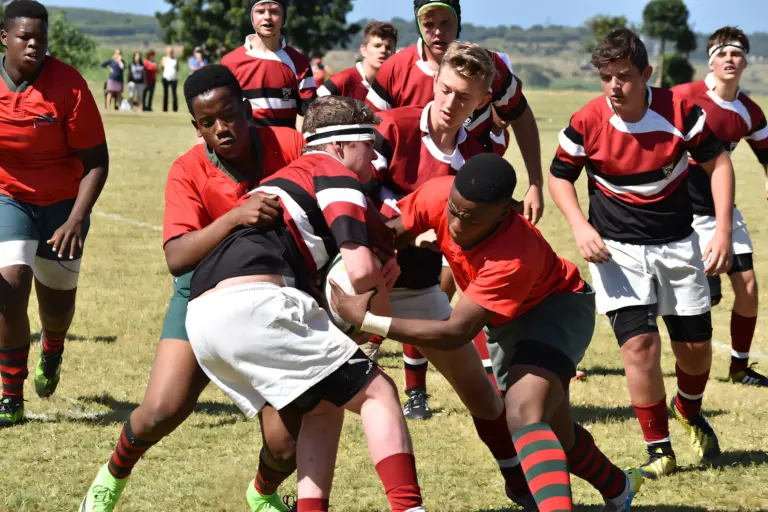

A wet winter afternoon at Kings Park reveals where the smart money sits. The ball gets greasy, handling errors multiply, and the referee’s whistle starts finding one pack far more often than the other. When the Sharks’ front row locks in under those conditions, the scoreboard rarely lies. The handicap line starts climbing, and punters who spotted the mismatch in the Tuesday team sheets already hold tickets at prices the market has since left behind.
This is not about blind loyalty to the black and white jersey. It is about reading a fixture through the lens of set-piece physics, then finding the gap between what the bookmaker opened and what the scrum will actually deliver.
Reading the Team Sheet Like a Form Guide
The Tuesday afternoon release of matchday 23s is where this edge begins. Most punters scan for star backline names or check who is wearing the number ten jersey. The sharper play runs straight to the front row.
For the Sharks, certain names function as alarm bells for opposition packs: Ox Nche at loosehead, Bongi Mbonambi at hooker, Thomas du Toit at tighthead. These are Test veterans who have scrummaged against the best tight forwards in world rugby and come out with their shoulders square. When all three start together at Kings Park, the Sharks have fielded arguably the most destructive scrummaging unit in South African domestic rugby.
The counter-reading is just as important. An opposing Currie Cup side fielding a tighthead who has spent most of the season on the injury list, or a loosehead shunted across from his preferred side, or a hooker with fewer than ten professional caps, indicates structural weaknesses. A pack of Nche, Mbonambi, and du Toit will identify and attack these from the first engagement.
The bench completes the picture. The Sharks can summon Ntuthuko Mchunu, Kerron van Vuuren, and Coenie Oosthuizen without meaningful drop-off. Some opposition packs empty their cupboard by the sixtieth minute. The Sharks’ reserve front row often tightens the screw.
How the Market Moves and Where the Value Hides
Bookmakers open conservatively. For a home fixture against mid-table Currie Cup opposition, the handicap might debut at -3.5. This reflects general home advantage and recent form. The line assumes a competitive set piece.
Once team sheets confirm the disparity, movement begins. The -3.5 drifts to -5.5, then settles at -7.5 or beyond. Each point of that shift represents market recognition that the Sharks will generate scoreboard pressure through penalties, territory, and potentially a collapsed maul or penalty try near the line.
The opportunity exists in two places. First, the early punter who identifies the mismatch before the line moves can lock in -3.5 or -4.5 at odds that will not survive the team sheet confirmation. Second, the punter who trusts their reading enough to take the adjusted -7.5 at improved odds, confident that the final margin will exceed even the moved line.
Consider the arithmetic. A R200 stake on the Sharks to win outright at 1.30 returns R260. The same R200 at -7.5 and 1.90 returns R380. The R120 difference is the precise reward for correctly anticipating how thoroughly a dominant scrum dismantles a weaker pack across eighty minutes.
The Conditions That Amplify the Edge
Kings Park in dry, fast conditions still favours the Sharks’ forward power. Kings Park in rain transforms the fixture entirely.
Wet weather produces more knock-ons, more scrums, and more opportunities for the dominant pack to exert pressure. A heavy Durban pitch saps the legs of lighter forwards. The Sharks’ front row, built for power rather than mobility, finds even greater purchase. Opposition packs that might survive twenty minutes of dry-weather scrummaging find themselves physically overwhelmed as the match progresses into the second half.
Humidity compounds the effect. The slippery ball becomes harder to control, increasing set-piece frequency. Each additional scrum is another roll of dice loaded in the Sharks’ favour.
Certain opponents carry structural vulnerability regardless of weather. Sides built around backline speed and expansive play often lack the forward depth to survive a grinding contest. When weather forces them into arm-wrestle rugby, their tactical identity collapses against the Sharks’ set-piece certainty.
The Mechanism of Scoreboard Pressure
Understanding why the handicap moves requires following the points. A dominant scrum generates scoring opportunities through multiple channels.
Each scrum penalty won in kicking range offers three points via the boot. Three such penalties across a match is a conservative estimate against overmatched opposition. More critically, repeated infringements near the try line can produce a penalty try, worth seven points without requiring any backline intervention. The psychological toll on opposition forwards often produces further discipline breakdowns, including yellow cards that create numerical advantages for extended periods.
Territory accumulation matters too. Penalties allow the Sharks to kick for touch, establishing camp in opposition territory. From there, the maul becomes a secondary weapon, itself capable of producing tries or further penalties. The scoreboard margin builds incrementally but relentlessly.
Building the Habit
The disciplined punter develops a pre-match routine that front-loads this analysis. Check the forecast for Kings Park. Examine both team sheets for front-row caps, recent injuries, and positional changes. Compare the Sharks’ starting and reserve packs against their opposition. Note any Springbok presence or absence.
When the indicators align—strong Sharks scrum, vulnerable opposition pack, wet or heavy conditions—the handicap bet becomes a calculated position rather than a gamble. The -7.5 line that might look aggressive to the casual punter reads as conservative to the punter who has tracked how these fixtures actually play out.
The R120 additional return on a R200 stake, multiplied across a season of correctly identified mismatches, builds a meaningful edge. This is not about any single fixture. It is about recognising a repeatable pattern in Sharks home rugby and having the discipline to bet it when the conditions present themselves.
The team sheets drop every Tuesday. The sharp punter is already waiting.